
If you’ve noticed a sewer smell in your yard, a soggy patch that never dries out, or drains that just won’t clear no matter how many times you plunge them, you may be facing a damaged sewer line. The good news: in most cases, you don’t need to tear up your yard, driveway, or patio to fix it.
At A Better Plumber, we got our start over a decade ago offering plumbing services including sewer inspections right here in Denver, and trenchless sewer repair has been part of how we solve sewer problems ever since. Using camera inspections, no-dig lining and bursting methods, we can repair or replace a failing sewer line from the inside out, often in a single day, with minimal disruption to your property.
Here’s what to know before you call anyone for trenchless sewer repair in Denver.
Sewer line damage doesn’t always announce itself with a dramatic backup. More often, it shows up as small, easy-to-miss symptoms that get worse over time. Watch for:
We service lines made of cast iron, clay, Orangeburg, and PVC, so no matter how old your home is, we’ve likely seen and fixed your pipe material before.
Not sure what’s going on underground? A camera inspection tells us in minutes whether your line is a good candidate for lining, or if something more is needed.
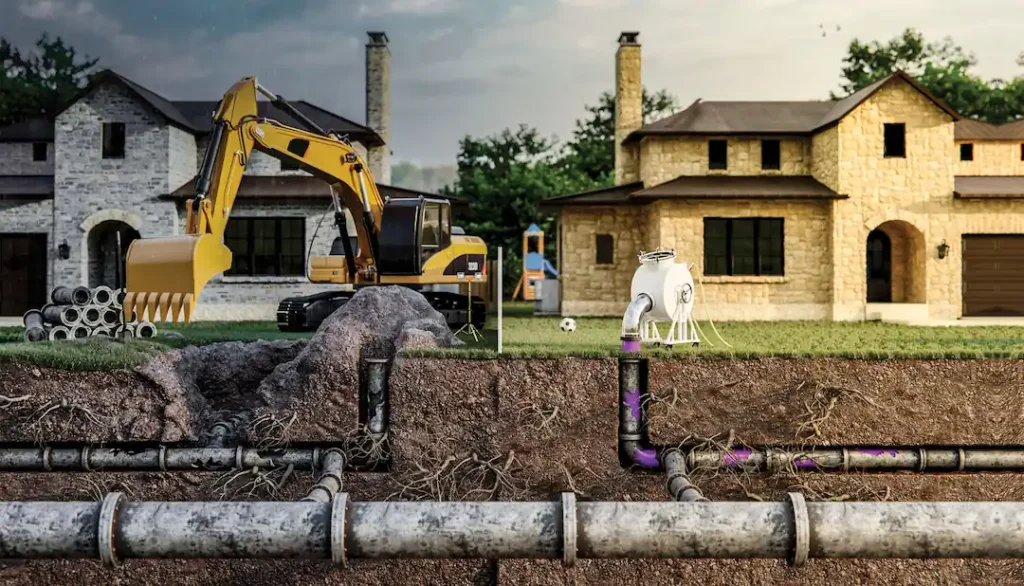
Trenchless repair has become the preferred option for most Denver homeowners because it solves the problem without the mess of traditional excavation. Benefits include:
Trenchless repair isn’t the right fit for every situation, though. If a pipe has fully collapsed, has severe misalignment, or has lost so much structural integrity that a liner has nothing solid to bond to, lining alone won’t hold. In those cases, we’ll walk you through pipe bursting or, in rare situations, traditional excavation, and explain exactly why before any work begins.
Trenchless sewer repair is often described as creating a “pipe within a pipe.” Rather than removing your damaged line, we install a new structural liner inside the existing pipe, sealing cracks, root intrusion points, and corrosion from the inside out.
The most common method is CIPP, or cured-in-place pipe, lining. Here’s the basic idea:
Because the liner bonds directly to the interior of your existing line, it eliminates the gaps and joints where roots and debris typically get in. That’s one reason lined pipes tend to outperform the original pipe long-term.
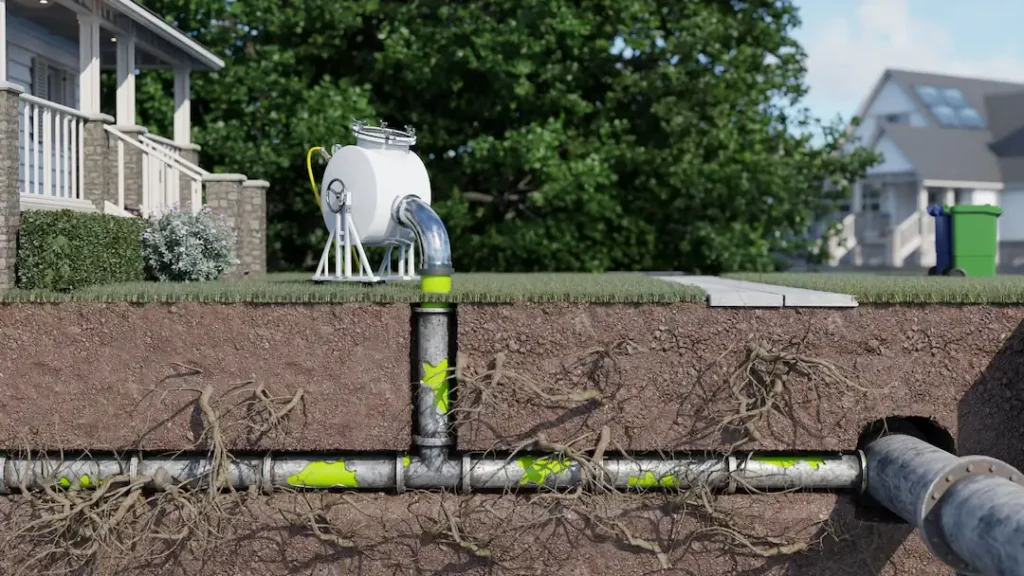
CIPP lining works when the host pipe still has structural integrity. When a line is too damaged, offset, or collapsed for lining to hold, pipe bursting is the trenchless alternative.
With pipe bursting, a bursting head is pulled through the old pipe, physically fracturing it outward while simultaneously pulling a brand-new pipe into place behind it. This method can also increase the pipe’s diameter, which is useful for homes that have added fixtures or square footage since the original line was installed.
Here’s how the two methods compare:
Both methods avoid trenching the full length of the sewer line, which is what keeps your yard, driveway, or patio largely intact either way.
Every trenchless repair follows a similar sequence to make sure the liner goes in clean and holds for the long haul:
You’ll get a written estimate before any work starts, and we’ll walk you through the camera footage so you can see exactly what we saw. No surprises.
For most homeowners, yes. While trenchless methods can carry a modest premium over the cheapest excavation quote, that gap is usually outweighed by what you save on restoration. Repouring a driveway, rebuilding a deck, or replacing mature landscaping can cost as much as the sewer repair itself. Add in a lining lifespan of 50 years or more, and trenchless repair typically comes out ahead on total cost and hassle.
Yes. Trenchless methods create a new pipe inside your existing line, accessed through a cleanout or a small entry point rather than a trench dug along the pipe’s full length. For homeowners, that means no ripped-up yard, driveway, or patio to deal with afterward.
A properly installed liner is built to last 50 years or more, comparable to or exceeding the lifespan of a newly excavated pipe.
It depends on your policy and the cause of the damage. Standard homeowners insurance often excludes damage from gradual wear, aging pipes, or root intrusion, since insurers typically treat that as a maintenance issue rather than a sudden loss. Many insurers offer a service line endorsement as an add-on, which can specifically cover repair or replacement of underground utility lines, including sewer pipes. It’s worth checking your policy or calling your provider before repairs begin to see what’s covered.
A pipe lining is a resin-saturated liner installed inside a damaged pipe. Once cured, it hardens into a smooth, seamless new pipe wall within the old one, sealing cracks, root intrusion points, and corrosion without removing the original pipe.
We don’t recommend it. Trenchless lining requires professional-grade equipment, including sewer cameras, hydro-jetting machinery, and controlled resin curing, to get right. A liner that’s improperly cleaned, positioned, or cured can fail early, trapping the problem inside a pipe that’s now much harder to access. This is a job for a licensed plumber with the right equipment, not a weekend DIY project.
A camera inspection is the fastest way to find out if trenchless repair is right for your home, and it comes with a clear, written estimate before any work begins.
Schedule a Sewer Camera Inspection Get a clear diagnosis and a written estimate.

At A Better Plumber, we are committed to ensuring that individuals with disabilities enjoy full access to our websites. In recognition of this commitment, we are in the process of making modifications to increase the accessibility and usability of this website, using the relevant portions of the Web Content Accessibility Guidelines 2.0 (WCAG 2.0) as our standard. Please be aware that our efforts are ongoing. If at any time you have difficulty using this website or with a particular web page or function on this site, please contact us by phone at (720) 642-7377 or email us at info@absolutefix.com and place “Web Content Accessibility (ADA)” in the subject heading and we will make all reasonable efforts to assist you.